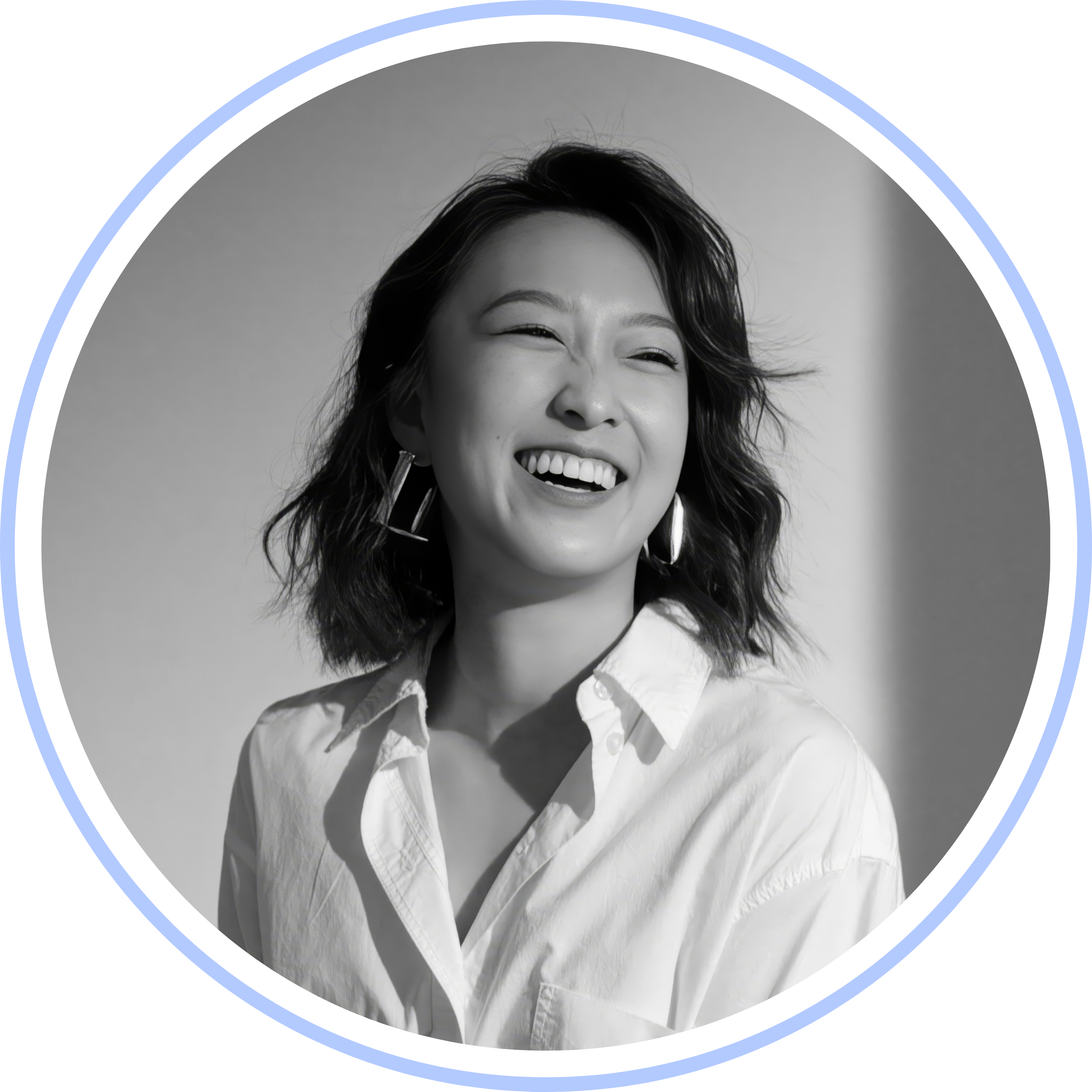
lucy lai 赖璐西
cognitive scientist & professor







research | teaching | opportunities | rec letters | phd application advice | art
hello, ucsd cog sci! 👋

If you’re a current UCSD student wondering who I am or whether you should take a course with me, you’re in the right place 😊 Allow me to introduce myself and let you know what you can expect from me as an instructor.
I’m an Assistant Teaching Professor 👩🏻🏫 in the Department of Cognitive Science at UCSD. I typically teach the following courses:
- COGS 9: Intro to Data Science
- COGS 19: Living and Learning with AI
- COGS 113: Cognitive Science of Belief
- COGS 109: Modeling and Data Analysis
- COGS 118D: Computational Modeling of Cognition and Behavior
- COGS 180: Decision Making in the Brain
- COGS 182: Introduction to Reinforcement Learning (coming soon!)
who am I? 🎓
I earned my Ph.D. in Neuroscience from Harvard in 2024, where I worked on developing computational theories of learning and decision making. Before that, I got my B.A. in Cognitive Science from Rice University. I was born in New England ☃️, but mainly grew up in Texas 🤠.
As an Assistant Teaching Professor 1, I focus on designing and teaching high-quality courses that will equip you with fundamental knowledge and skills across several subfields of cognitive science. My research and teaching background spans neuroscience, psychology, psychiatry, machine learning, and behavioral economics. I’m especially passionate about inclusive and innovative pedagogy, active learning, and using AI to augment (but not replace!) how we learn.
my teaching philosophy 👩🏻🏫
I’ve been teaching in college classrooms for the last 10 years, and have spent a lot of time thinking about what it means to be a good teacher, what effective learning looks like, and what kind of classroom environment I want to build. Here’s what you can expect if you take a course with me:
- A structured learning experience 📚 — I design my courses to be organized, fair, and clear in their objectives so that you can focus on learning and not logistics. I strive to be transparent in what’s expected of you, when assignments are due, and when to expect feedback.
- A spirit of curiosity 🔍 — Too often, science is taught like a list of facts to memorize. But real scientists are motivated by questions and puzzles! I aim to foster that spirit throughout the course, in my lectures, assignments, and even exams.
- Rigor and intellectual agency 🤔 — I want you to leave my courses knowing how to think critically, ask questions, and drive your own learning.
- Skill-based learning 🛠️ — It’s more important to me that you develop useful, domain-general skills in my courses over memorizing facts for exams. I strive to connect class material to real-world problems and practical skills such as critical thinking, meta-learning, collaboration, and communicating complex ideas.
- Learning is active and collaborative 🤝 — Get ready to think, talk, write, and work with your peers. We often learn better when we learn together!
- Feedback goes both ways 🔁 — You’ll receive meaningful feedback on your work, and I’ll ask for your feedback to keep improving the course.
- You belong here 🌈 — No matter your background or identity, I want you to feel welcome, heard, and supported in class. I’m committed to doing whatever I can to help every student succeed and grow.
If you’re curious about all the details of my teaching philosophy, you can check out my full teaching statement.
FAQs
- Are you going to be designing any new courses?
- Do you require attendence?
- Can I do research with you?
- I am a PhD student, can you be my main supervisor?
Are you going to be designing any new courses?
Yes! I’m currently in the process of designing two new COGS courses:
| Course | Description |
| COGS 19: Living and Learning with AI | Advancements in artificial intelligence (AI) are transforming the way we live, work, and learn. How can we leverage AI’s potential while preserving human ingenuity and intellectual agency? This course equips students to critically engage with and creatively utilize AI through hands-on experimentation. Students will evaluate AI’s capabilities and limitations, examine its impact on work, education, and creativity, and develop strategies for its responsible use. |
| COGS 113: Cognitive Science of Belief | Beliefs motivate our behaviors: they influence who we vote for, whether we take action against climate change, and what we think happens when we die. How do beliefs form, and how are they influenced by social and cognitive factors? Why do some beliefs persist despite conflicting evidence, while others change? This course explores the mechanisms of belief formation and change through experimental and theoretical perspectives. |
I expect these courses to be offered for the first time starting in the 2026-2027 academic year.
Do you require attendence?
I don’t require lecture attendence in my courses (it’s often extra credit), but I strive to make class a valuable use of your time. I put effort into designing interactive, engaging lectures that promote active learning (there is a plethora of scientific evidence showing how this approach is more effective for retaining and understanding material). Attending lecture will help you stay on top of the course and reduce the need to play catch-up later. That said, I also value flexibility, so all lectures will be recorded and podcasted!
Can I do research with you?
During my first few years at UCSD, I’ll be focused on developing and teaching several courses for the first time, and I want to make sure they are well-prepped and high-quality. As a result, I am not currently taking research assistants. However, there is always an opportunity to change my mind by doing well in one of my upper-division classes (e.g., COGS 118D, 180, 182) and demonstrating self-motivation and creativity through your final project.
I am a PhD student, can you be my main supervisor?
As a teaching-focused faculty member, my first priority is providing high-quality undergraduate instruction. That said, I do maintain an active research agenda working on computational models of learning, decision making, and belief change (you can read more about my research here). While I will be focusing my first year at UCSD on teaching, I’m open to advising or co-advising a very limited number of Ph.D. students in the future through the Cognitive Science Ph.D. Program. I’m also happy to serve on dissertation committees where there’s a good research fit.